From the Cottage: Homesteading Without the Overwhelm (A Beginner’s Guide to Living Slower — Even If You Don’t Own Chickens Yet) 🌿
Let’s clear something up immediately:
You do not need acres of land, a milk cow named Daisy, or the ability to churn butter before sunrise to start homesteading.
Despite what the internet sometimes suggests, homesteading isn’t about perfection — it’s about intention. It’s choosing slower, cozier, more self-sufficient habits that make everyday life feel calmer, more grounded, and honestly… a little more magical.
Welcome to homesteading — cottage edition.

What Homesteading Actually Means (Spoiler: It’s Not Just Farming)
At its heart, homesteading is simply this:
Learning to make more, waste less, and live closer to the rhythms of home.
That might look like:
Baking your own bread
Growing herbs on a windowsill
Cooking instead of ordering takeout (occasionally… we’re realistic here)
Mending instead of replacing
Decorating with intention instead of impulse buying
It’s less “Little House on the Prairie” and more “soft life but with sourdough.”
Step 1: Start With One Thing (Seriously, Just One)
The biggest mistake beginners make is trying to become a full homesteader overnight.
You do not need:
❌ chickens
❌ a greenhouse
❌ twelve mason jar systems
❌ a personality change

Pick one skill that fits your current life.
Here are beginner-friendly options:
🌱 Grow Something Small
Start with herbs — basil, mint, or rosemary thrive indoors. Watching something grow changes how you feel about your space in ways that are hard to explain until you experience it.
Bonus: You instantly feel like the main character watering plants in morning light.
🍞 Learn One Homemade Food
Choose something forgiving:
bread
soup
granola
jam
You’re not trying to impress a pioneer grandmother. You’re building confidence.
“Oh… I can actually make this myself.”
🧺 Create a Home Rhythm
Homesteading isn’t just skills — it’s routines.
Try:
Sunday reset cleaning
weekly baking day
evening tea ritual
opening windows every morning
Small rituals turn houses into homes.
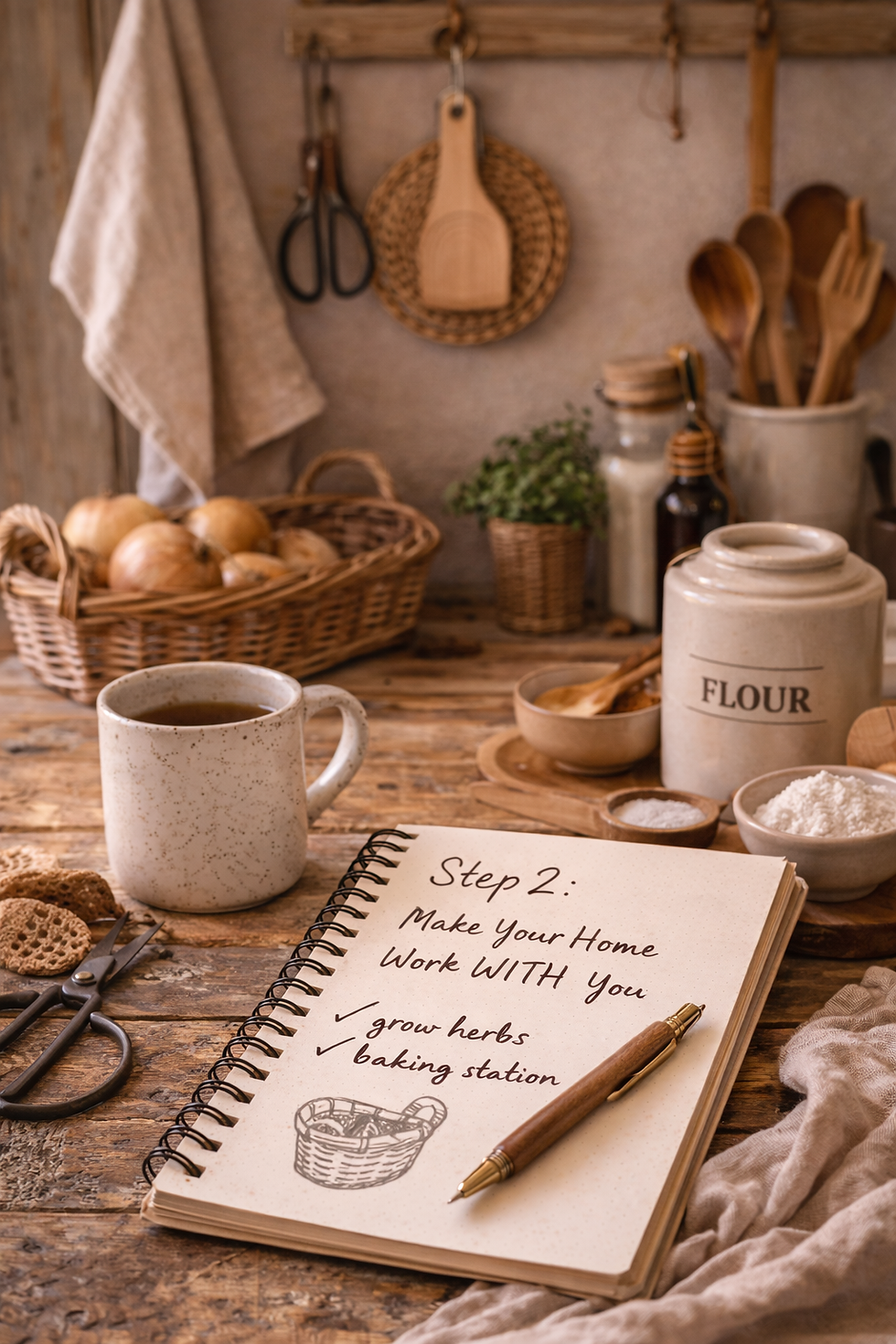
Step 2: Make Your Home Work With You
Homesteading isn’t about doing more work — it’s about doing work smarter.
Ask:
What do I buy constantly?
What stresses me weekly?
What could be simplified?
Examples:
Keep baskets where clutter happens.
Store cooking tools near where you actually cook.
Create cozy “stations” — coffee, baking, crafting.
Your environment should support your life, not fight it.
Step 3: Romanticize the Practical Things
This might be the secret ingredient nobody talks about.
Homesteading works when you make ordinary tasks enjoyable.
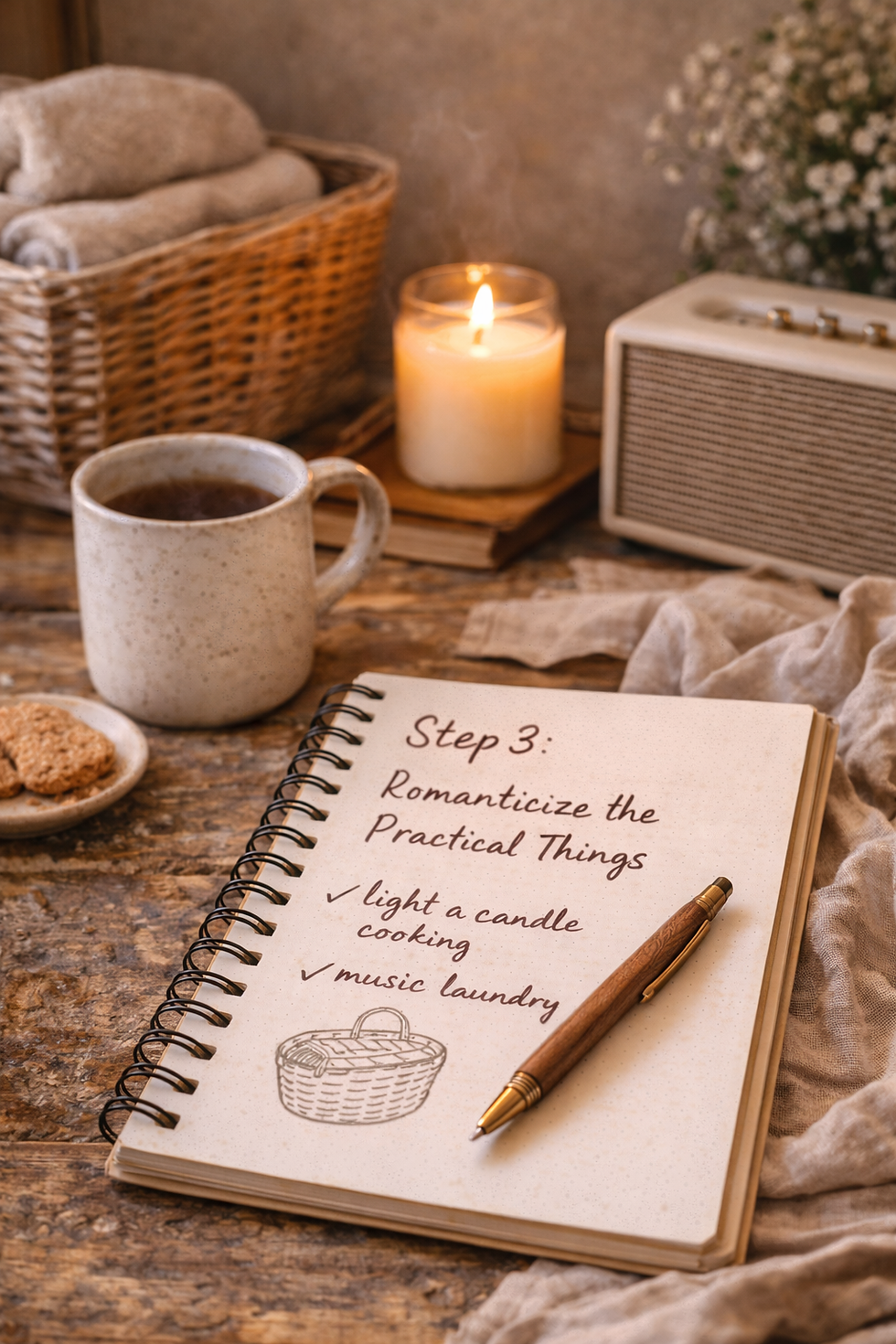
Light a candle while cooking.
Play music while folding laundry.
Use pretty jars even if they hold snacks instead of homegrown oats.
You’re not pretending life is perfect — you’re choosing to make it pleasant.
And honestly? That changes everything.
Step 4: Learn the Art of Seasonal Living
Homesteading follows seasons instead of trends.
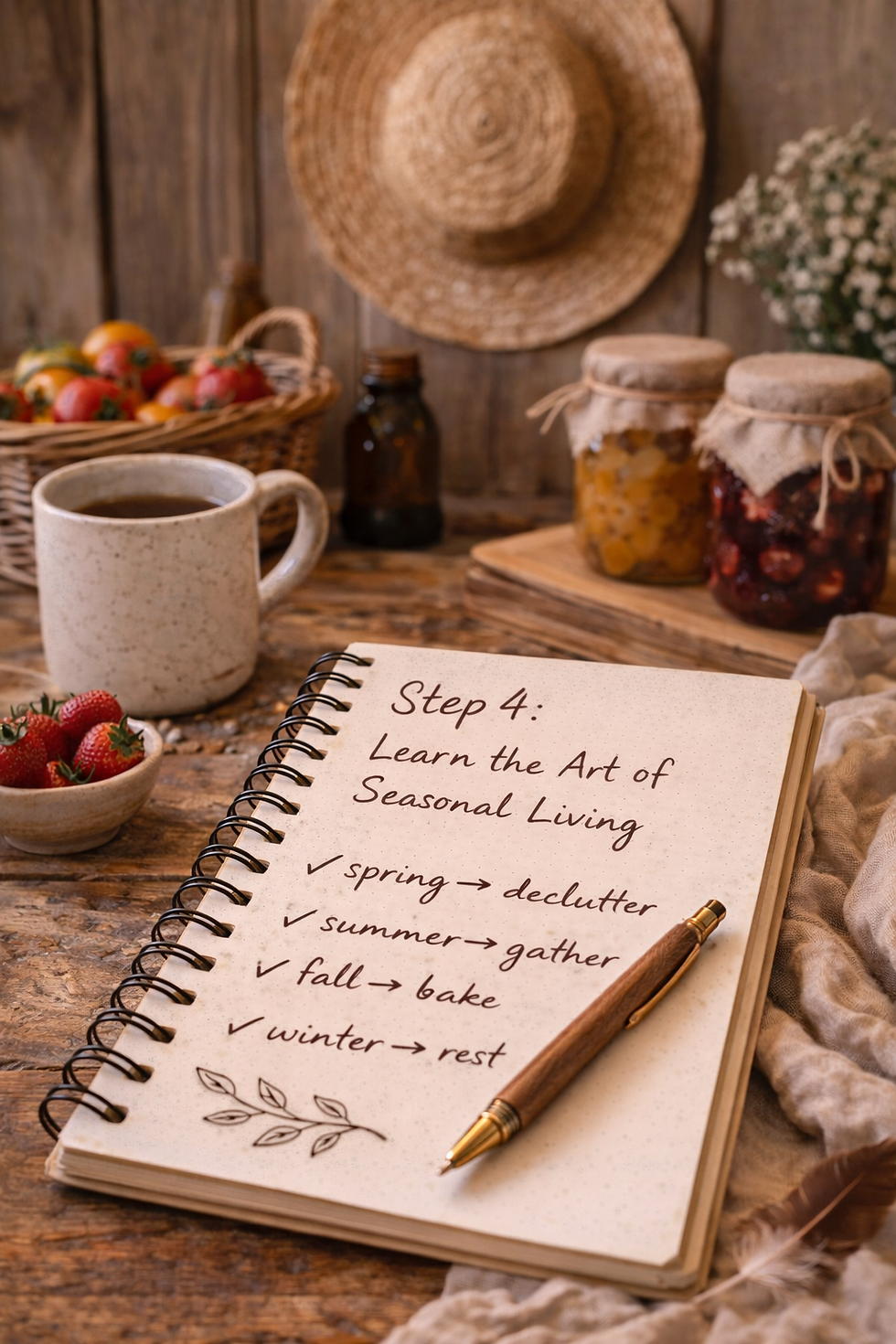
Spring → planting, refreshing, decluttering
Summer → growing, gathering, slowing evenings
Fall → baking, preserving, nesting
Winter → resting, crafting, planning
When you align your home with the season, life feels less rushed — like you’re moving with time instead of chasing it.
Step 5: Progress Over Aesthetic
Here’s the truth social media skips:
Real homesteading is messy.
Bread fails. Plants die. Projects half-finish. Kitchens get chaotic.
The goal isn’t a perfect cottage aesthetic — it’s capability.
Every skill you learn builds confidence:
“I can make this.”
“I can fix this.”
“I can take care of my home.”
That feeling is the real reward.

A Gentle Way to Begin Today
If you want a simple starting point, try this tonight:
Make a warm drink.
Put your phone away for 20 minutes.
Sit somewhere cozy.
Write one thing you’d like to learn to make or grow.
That’s it.
That tiny decision is how homesteading begins — not with land, but with intention.
Homesteading isn’t about escaping modern life.
It’s about softening it.
A slower morning.
A handmade object.
A meal cooked with care.
A home that feels lived in and loved.

And little by little, without even noticing, you build a life that feels more grounded, more capable, and more yours.
Welcome to the cottage. 🌿✨


Comments